

In industrial processing, the biggest production problems are often caused by the smallest particles. A few unwanted solids in liquid flow, poor filtration efficiency, material clogging, or inconsistent separation can reduce plant productivity, increase maintenance costs, and shorten equipment lifespan. That is why advanced screening technology has become one of the most important parts of modern industrial operations.
From wastewater treatment plants to food processing facilities, mining operations, pulp & paper industries, and chemical manufacturing, screening systems now play a direct role in operational stability, product purity, and production efficiency.
At Linker Screens, industrial screening is not viewed as a simple filtration process. It is considered a precision-engineered flow management system designed to improve performance, reduce downtime, and optimize material recovery across industries.
This guide explores the working principles, industrial advantages, and modern applications of:
- Inner screen systems
- Center pipe technology
- Sieve bend screen solutions
- Johnson screen structures
- DSM screen systems
- Rotary drum screen equipment
More importantly, it explains how combining these technologies intelligently can create a much more efficient separation ecosystem inside industrial plants.
Why Industrial Screening Matters More Than Ever
Industries today are under pressure to:
- Reduce water consumption
- Improve recovery rates
- Lower energy usage
- Minimize maintenance downtime
- Increase process automation
- Meet stricter environmental regulations
Traditional filtration systems often struggle with:
- High clogging rates
- Uneven particle separation
- Excessive maintenance
- Flow instability
- Low throughput efficiency
Modern screening systems solve these challenges by combining:
- Precision slot engineering
- Optimized hydraulic flow
- Self-cleaning structures
- Wear-resistant materials
- Custom process integration
The result is smoother production, cleaner output, and reduced operational losses.
Inner Screen Technology: The Hidden Efficiency Booster
What Is an Inner Screen?
An inner screen is an internal screening structure designed to separate solids from liquids or classify particles during industrial flow processes. Unlike external filtration systems, inner screens work directly inside pipelines, rotating drums, or process chambers.
They are commonly used in:
- Wastewater treatment
- Chemical processing
- Food production
- Mining operations
- Pulp and paper plants
- Starch processing industries
The main purpose of an inner screen is to maintain continuous flow while removing unwanted materials without interrupting production.
Why Inner Screens Are Becoming More Advanced
Most industries focus on the visible machinery, but the real efficiency often depends on internal screening performance.
Modern inner screen systems now feature:
- Precision wedge wire construction
- Anti-clogging flow channels
- Corrosion-resistant alloys
- High open-area designs
- Self-cleaning capabilities
At Linker Screens, inner screen engineering focuses heavily on reducing turbulence inside processing systems. This helps maintain stable pressure, improve material consistency, and extend equipment life.
A Less Discussed Advantage: Flow Psychology
One overlooked aspect of industrial screening is how particle movement behaves under pressure changes.
Poorly designed inner screens create:
- Micro turbulence zones
- Particle stacking
- Uneven flow velocity
- Premature wear
Advanced inner screen geometry can actually guide particles naturally through the flow path instead of fighting against them. This significantly improves filtration consistency while lowering energy consumption.
That subtle engineering difference is rarely discussed publicly but has major long-term operational benefits.
Center Pipe Systems: The Backbone of Controlled Industrial Flow
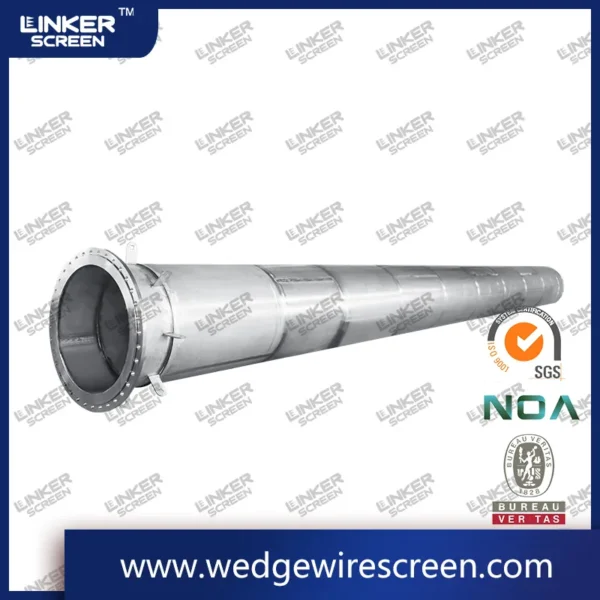
Understanding the Role of a Center Pipe
A center pipe acts as the structural and hydraulic core of many industrial screening systems. It controls:
- Fluid distribution
- Pressure balance
- Structural support
- Internal flow alignment
Center pipe systems are widely used in:
- Water treatment plants
- Oil & gas filtration
- Resin traps
- Sand filters
- Rotary drum systems
- Wedge wire assemblies
Without a properly engineered center pipe, even high-quality screening systems can experience:
- Pressure imbalance
- Uneven filtration
- Structural fatigue
- Reduced throughput
What Makes Modern Center Pipe Designs Different?
Traditional center pipes mainly focused on structural support. Modern center pipe engineering now emphasizes hydraulic intelligence.
Today’s advanced center pipe systems include:
- Optimized perforation patterns
- Precision slot openings
- Enhanced pressure equalization
- High-strength stainless steel construction
- Custom internal flow geometry
At Linker Screens, center pipe systems are designed to work together with the surrounding screening structure rather than functioning as isolated components.
This integrated design improves:
- Flow consistency
- Debris management
- System longevity
- Energy efficiency
Sieve Bend Screen Systems: High-Efficiency Gravity Separation
What Is a Sieve Bend Screen?
A sieve bend screen is a curved stationary screen designed for solid-liquid separation using gravity and flow acceleration.
It is widely used in:
- Coal preparation plants
- Mineral processing
- Food processing
- Sugar industries
- Wastewater systems
- Starch manufacturing
The curved structure allows liquid to pass through while solids continue moving across the screen surface.
Why Sieve Bend Screens Are So Effective
The biggest advantage of a sieve bend screen is its simplicity combined with high efficiency.
Unlike rotating equipment, sieve bend screens:
- Require lower maintenance
- Consume less energy
- Handle high flow rates
- Deliver continuous operation
Their curved design creates natural acceleration, helping particles separate faster with minimal mechanical assistance.
The Engineering Detail Most Suppliers Ignore
The angle of curvature and slot orientation dramatically affect separation quality.
Small adjustments in:
- Radius design
- Slot direction
- Feed velocity
- Surface smoothness
can significantly improve:
- Recovery rates
- Moisture reduction
- Throughput stability
At Linker Screens, sieve bend screen customization focuses on actual plant operating conditions rather than generic sizing charts.
That process-specific engineering often delivers far better long-term results.
Johnson Screen Technology: Precision Filtration at Industrial Scale
What Is a Johnson Screen?
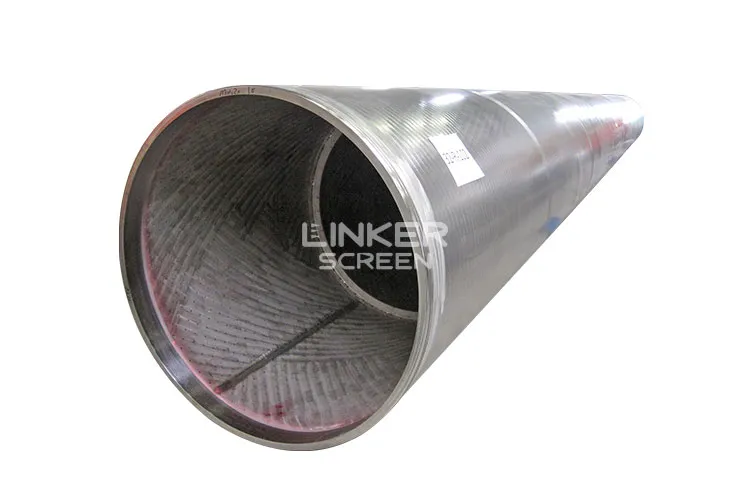
A Johnson screen is a wedge wire screening system made using V-shaped profile wires welded onto support rods.
This structure creates:
- Precise slot openings
- Excellent strength
- High open area
- Superior anti-clogging performance
Johnson screen systems are commonly used in:
- Water wells
- Industrial filtration
- Food processing
- Pulp & paper industries
- Petrochemical plants
- Resin retention systems
Why Wedge Wire Geometry Matters
The V-shaped wire design creates a unique filtration advantage.
Unlike conventional mesh systems, Johnson screens:
- Minimize particle blockage
- Improve backwashing efficiency
- Maintain consistent slot opening
- Reduce pressure drop
This geometry allows particles to touch only the outer edge of the wire, preventing deep clogging inside the screen.
The “Invisible Efficiency” Benefit
One major hidden advantage of Johnson screen systems is process stability.
Stable filtration creates:
- More predictable production output
- Reduced chemical usage
- Better automation response
- Lower maintenance scheduling risks
Many facilities focus only on filtration capacity, but consistency often matters more than peak performance.
At Linker Screens, Johnson screen manufacturing emphasizes precision slot tolerance because even minor inconsistencies can affect large-scale industrial performance over time.
DSM Screen Solutions: Advanced Separation with Minimal Energy
What Is a DSM Screen?
A DSM screen is a static wedge wire screen commonly used for:
- Fine particle separation
- Fiber recovery
- Solid-liquid classification
- Wastewater treatment
DSM screens operate without moving parts, making them highly reliable and energy efficient.
Industries using DSM screens include:
- Pulp & paper
- Food processing
- Textile industries
- Chemical plants
- Starch production
Why DSM Screens Remain Essential in Modern Plants
Even with advanced automated systems available today, DSM screens remain popular because of their:
- Low operational cost
- High durability
- Minimal maintenance
- Continuous separation capability
The screen surface allows liquid to pass quickly while solids remain on the outer layer.
This simple but effective process helps facilities reduce:
- Water waste
- Fiber loss
- Processing interruptions
A Modern Improvement in DSM Screen Engineering
New-generation DSM screen systems now focus heavily on:
- Slot precision optimization
- Better wear resistance
- Improved flow distribution
- Reduced splash loss
At Linker Screens, DSM screen systems are engineered to balance both separation efficiency and flow stability.
That balance is critical because excessive retention can create buildup problems while insufficient retention reduces recovery performance.
Rotary Drum Screen Technology: Continuous Automated Screening
What Is a Rotary Drum Screen?
A rotary drum screen is a mechanical screening system where a rotating cylindrical drum separates solids from liquids.
It is commonly used in:
- Municipal wastewater treatment
- Industrial water recycling
- Food processing
- Sludge treatment
- Agricultural processing
The rotating motion continuously removes debris while maintaining uninterrupted flow.
Why Rotary Drum Screens Are Popular
Rotary drum screens are ideal for high-capacity operations because they offer:
- Continuous automatic cleaning
- High throughput handling
- Reduced manual maintenance
- Stable screening performance
Modern rotary drum systems can process extremely high volumes while maintaining fine separation quality.
The Future of Rotary Drum Screening
Advanced rotary drum screen systems now integrate:
- Smart monitoring sensors
- Automated pressure controls
- Wear prediction systems
- Optimized spray cleaning
- Energy-saving drive systems
At Linker Screens, rotary drum engineering focuses on reducing internal friction and improving hydraulic balance.
This not only extends equipment lifespan but also lowers operational energy costs over time.
How Modern Screening Systems Work Together
The most efficient industrial plants no longer rely on a single screening solution.
Instead, they combine:
- Inner screen systems
- Center pipe flow control
- Johnson screen filtration
- DSM fine separation
- Sieve bend gravity processing
- Rotary drum automation
This layered approach creates:
- Better material recovery
- Lower maintenance costs
- Higher operational consistency
- Improved water management
- Reduced production interruptions
Choosing the Right Screening Solution
Selecting the right industrial screening equipment depends on several factors:
- Particle size
- Flow rate
- Material composition
- Pressure conditions
- Temperature
- Corrosion exposure
- Required separation accuracy
There is no universal solution for every plant.
That is why process-specific engineering has become far more important than simply purchasing standard screening equipment.
Why Precision Engineering Is the Future of Industrial Separation
Industrial screening is evolving rapidly.
The future is no longer about simple filtration. It is about:
- Intelligent flow control
- Process optimization
- Predictive maintenance
- Resource recovery
- Sustainable operation
Companies that invest in advanced screening technology gain advantages in:
- Operational efficiency
- Product quality
- Environmental compliance
- Long-term cost reduction
At Linker Screens, the focus is not only on manufacturing screens but on improving the entire industrial separation process through engineering precision and application-specific design.
Conclusion
From inner screen systems to rotary drum screen technology, industrial separation equipment now plays a central role in modern production efficiency.
Whether using:
- A center pipe for hydraulic stability,
- A sieve bend screen for gravity separation,
- A Johnson screen for precision filtration,
- A DSM screen for fine particle recovery,
- Or a rotary drum screen for automated continuous operation,
The real value comes from intelligent engineering and proper system integration.
As industries continue demanding cleaner processes, higher efficiency, and lower operational costs, advanced screening solutions will become even more critical.
The companies that understand the science behind flow behavior, particle dynamics, and precision screening will lead the next generation of industrial processing performance.