

In industrial processing, most companies focus on large machines, automated systems, and production speed. But in reality, some of the most important performance improvements come from components many people never notice.
A slight improvement in material separation can:
- Reduce moisture levels
- Increase recovery rates
- Lower maintenance downtime
- Improve production consistency
- Save thousands in operational costs
This is where advanced screening and separation technologies such as the Outlet collector, conical wedge wire screen, Outer baskets, and centrifuge basket become critically important.
These are not just metal components inside industrial equipment. They are precision-engineered flow control systems that directly influence productivity, filtration quality, and long-term plant efficiency.
At Linker Screens, industrial screening systems are engineered not only for filtration but for improving the complete material handling process through intelligent design, hydraulic optimization, and application-specific manufacturing.
This guide explores how these technologies work, why they matter, and how modern engineering is changing industrial separation performance across industries worldwide.
Why Industrial Separation Technology Is Evolving Rapidly
Industries today face growing pressure to:
- Increase production efficiency
- Reduce energy consumption
- Minimize water usage
- Lower maintenance costs
- Improve product quality
- Meet environmental regulations
Traditional separation systems often create problems such as:
- Material blockage
- Inconsistent particle recovery
- Excessive vibration
- Uneven flow distribution
- Premature equipment wear
Modern screening solutions now focus on something deeper:
controlling the behavior of flow, pressure, and particles simultaneously.
This shift is transforming industrial processing across:
- Mining industries
- Wastewater treatment plants
- Food processing facilities
- Chemical manufacturing
- Coal preparation plants
- Starch industries
- Pulp & paper production
Outlet Collector Systems: The Overlooked Component That Controls Process Stability
What Is an Outlet Collector?
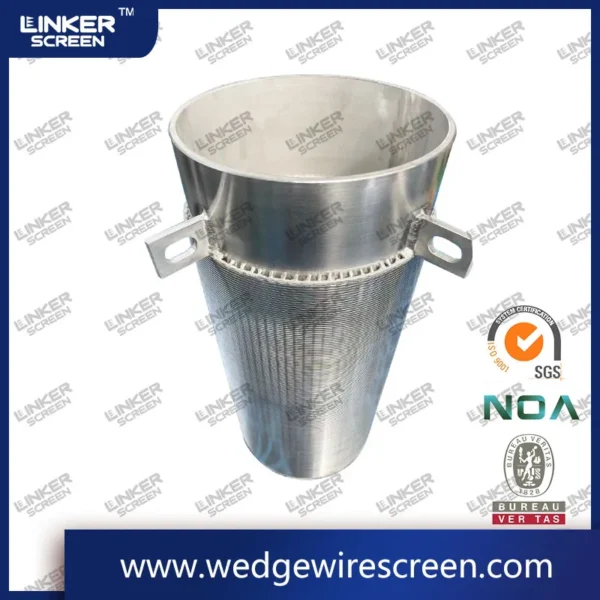
An Outlet collector is a critical component used in industrial filtration and separation systems to collect processed fluid or separated materials efficiently from screening equipment.
Outlet collectors are commonly used in:
- Dewatering systems
- Centrifuge systems
- Filtration units
- Screening machinery
- Slurry processing systems
- Industrial fluid management systems
While many operators focus on filtration surfaces, the outlet collector often determines whether the entire separation process remains stable.
Why Outlet Collectors Matter More Than Most Industries Realize
A poorly designed outlet collector can create:
- Pressure imbalance
- Material accumulation
- Uneven discharge flow
- Increased turbulence
- Reduced separation efficiency
Modern outlet collector systems are now engineered to optimize:
- Flow direction
- Material discharge speed
- Hydraulic balance
- Particle movement behavior
At Linker Screens, outlet collector systems are designed with process-flow intelligence rather than simple discharge functionality.
That engineering difference significantly improves:
- Operational consistency
- Moisture reduction
- Product recovery
- Equipment lifespan
The Hidden Science of Material Flow Inside Outlet Collectors
One rarely discussed aspect of industrial separation is flow psychology.
Particles do not move randomly inside industrial systems.
They respond to:
- Velocity changes
- Pressure zones
- Surface angles
- Internal turbulence
- Discharge geometry
Modern outlet collector designs use carefully engineered pathways that guide materials naturally through the discharge system while reducing unnecessary resistance.
This creates:
- Smoother processing
- Reduced clogging
- Better throughput stability
- Lower energy consumption
These small engineering improvements often create major long-term operational savings.
Conical Wedge Wire Screen Technology: Precision Separation Through Intelligent Geometry
What Is a Conical Wedge Wire Screen?
A conical wedge wire screen is a specially designed wedge wire filtration structure with a conical shape used for efficient solid-liquid separation, flow control, and particle classification.
Unlike flat screening systems, conical wedge wire screens use angled geometry to improve:
- Flow acceleration
- Material distribution
- Separation efficiency
- Self-cleaning performance
These systems are widely used in:
- Food processing industries
- Chemical filtration
- Water treatment plants
- Starch processing
- Industrial separation systems
- Mineral processing applications
Why Conical Geometry Improves Filtration Performance
Most people think filtration depends only on slot size.
But geometry matters just as much.
The conical structure creates:
- Controlled flow compression
- Improved material guidance
- Better pressure distribution
- Reduced dead zones
- Enhanced self-cleaning action
This helps reduce particle buildup and improves continuous operation performance.
At Linker Screens, conical wedge wire screen systems are engineered using precision wedge wire profiles and optimized cone angles based on actual industrial processing conditions.
That application-specific customization improves overall separation accuracy.
Wedge Wire Technology: Why It Dominates Modern Industrial Screening
The success of a conical wedge wire screen depends heavily on wedge wire design.
Wedge wire technology offers several major advantages:
- Anti-clogging performance
- Precise slot opening
- High mechanical strength
- Superior wear resistance
- Excellent flow characteristics
The V-shaped wire profile allows particles to contact only the surface edge rather than becoming deeply trapped inside openings.
This dramatically improves:
- Cleaning efficiency
- Flow stability
- Long-term filtration performance
Outer Baskets: The Structural Core of Industrial Separation Systems
What Are Outer Baskets?
Outer baskets are cylindrical or conical screening structures used in separation systems to retain solids while allowing liquids or fine particles to pass through.
They are commonly used in:
- Centrifuge systems
- Coal processing plants
- Mining industries
- Dewatering equipment
- Industrial separation machinery
Outer baskets must withstand:
- High rotational forces
- Abrasive materials
- Continuous operational pressure
- Corrosive environments
Because of these demanding conditions, precision engineering becomes extremely important.
Why Outer Basket Design Impacts Entire Plant Efficiency
Many industries underestimate the importance of outer basket engineering.
However, improper basket design can lead to:
- Excessive vibration
- Uneven wear
- Poor material retention
- Reduced separation performance
- Increased maintenance downtime
Modern outer basket systems now focus on:
- Structural balance
- Precision slot configuration
- Dynamic rotational stability
- Wear-resistant materials
At Linker Screens, outer basket systems are manufactured with strict dimensional accuracy to maintain stable performance during high-speed industrial operation.
The Shift Toward High-Precision Outer Basket Manufacturing
Traditional industrial baskets were often treated as replaceable wear parts.
Today, they are viewed as performance-critical engineering components.
Modern outer basket manufacturing includes:
- CNC precision fabrication
- Robotic welding systems
- Dynamic balancing
- Advanced alloy selection
- Precision slot calibration
This results in:
- Longer service life
- Better material recovery
- Lower operational vibration
- More stable throughput
Centrifuge Basket Technology: Where Separation Meets High-Speed Engineering
What Is a Centrifuge Basket?
A centrifuge basket is a rotating separation component designed to separate solids from liquids using centrifugal force.
Centrifuge baskets are widely used in:
- Coal industries
- Chemical processing
- Mining operations
- Pharmaceutical industries
- Wastewater treatment
- Food processing plants
The basket rotates at high speed, forcing liquid through screening slots while retaining solid particles.
Why Centrifuge Basket Engineering Is Extremely Complex
Centrifuge basket systems operate under intense conditions:
- High rotational speeds
- Constant abrasive contact
- Continuous pressure stress
- Dynamic material loading
Even minor manufacturing inaccuracies can create:
- Equipment vibration
- Structural fatigue
- Reduced recovery efficiency
- Increased operational risk
This is why precision engineering is essential.
At Linker Screens, centrifuge basket manufacturing focuses heavily on:
- Rotational balance
- Slot precision
- Wear resistance
- Structural durability
- High-speed operational stability
The Engineering Principle Most Companies Ignore: Flow Harmony
One of the biggest reasons industrial separation systems fail is because components are designed independently.
But true performance comes from flow harmony.
The:
- Outlet collector
- Conical wedge wire screen
- Outer baskets
- Centrifuge basket
must all work together as part of a unified hydraulic system.
If one component creates turbulence or uneven flow, the entire separation process becomes less efficient.
This systems-based engineering philosophy is becoming the future of industrial screening technology.
Industries That Depend on Advanced Separation Technology
Modern industrial screening systems are critical in:
- Coal preparation plants
- Mining operations
- Food processing facilities
- Chemical industries
- Wastewater treatment systems
- Pharmaceutical manufacturing
- Starch processing plants
- Oil & gas industries
These industries require:
- Reliable continuous operation
- Precision filtration
- Low maintenance systems
- Energy-efficient processing
- Long equipment lifespan
Advanced separation technology directly influences profitability and production reliability.
Why Custom Engineering Is Replacing Standard Industrial Screening
The industrial world is moving away from generic filtration systems.
Every process has unique variables:
- Particle size
- Moisture levels
- Material abrasiveness
- Flow velocity
- Temperature exposure
- Pressure conditions
This means screening systems must now be designed specifically for actual plant operating conditions.
At Linker Screens, engineering teams focus on understanding complete process behavior before manufacturing industrial screening components.
This approach helps improve:
- Process optimization
- Recovery efficiency
- Equipment durability
- Long-term operational performance
The Future of Industrial Separation Technology
Industrial separation systems are evolving toward:
- Smart monitoring systems
- Predictive maintenance
- Automated optimization
- Energy-efficient processing
- Intelligent flow management
Future screening systems will increasingly combine:
- Precision engineering
- Hydraulic science
- Material flow analysis
- Real-time operational data
The companies that understand these combined engineering principles will lead the next generation of industrial processing efficiency.
Conclusion
Industrial separation is no longer just about filtering materials.
It is about controlling flow, improving stability, reducing waste, and maximizing operational performance.
Whether using:
- An Outlet collector for optimized discharge management,
- A conical wedge wire screen for precision flow separation,
- Outer baskets for structural screening performance,
- Or a centrifuge basket for high-speed material recovery,
Modern industries rely on advanced engineering to maintain productivity and process efficiency.
At Linker Screens, industrial screening systems are engineered with a focus on real-world operational challenges, helping industries achieve reliable separation performance, improved durability, and long-term efficiency gains.